By Meghan Kapilevich | VCA Calvert Veterinary Center
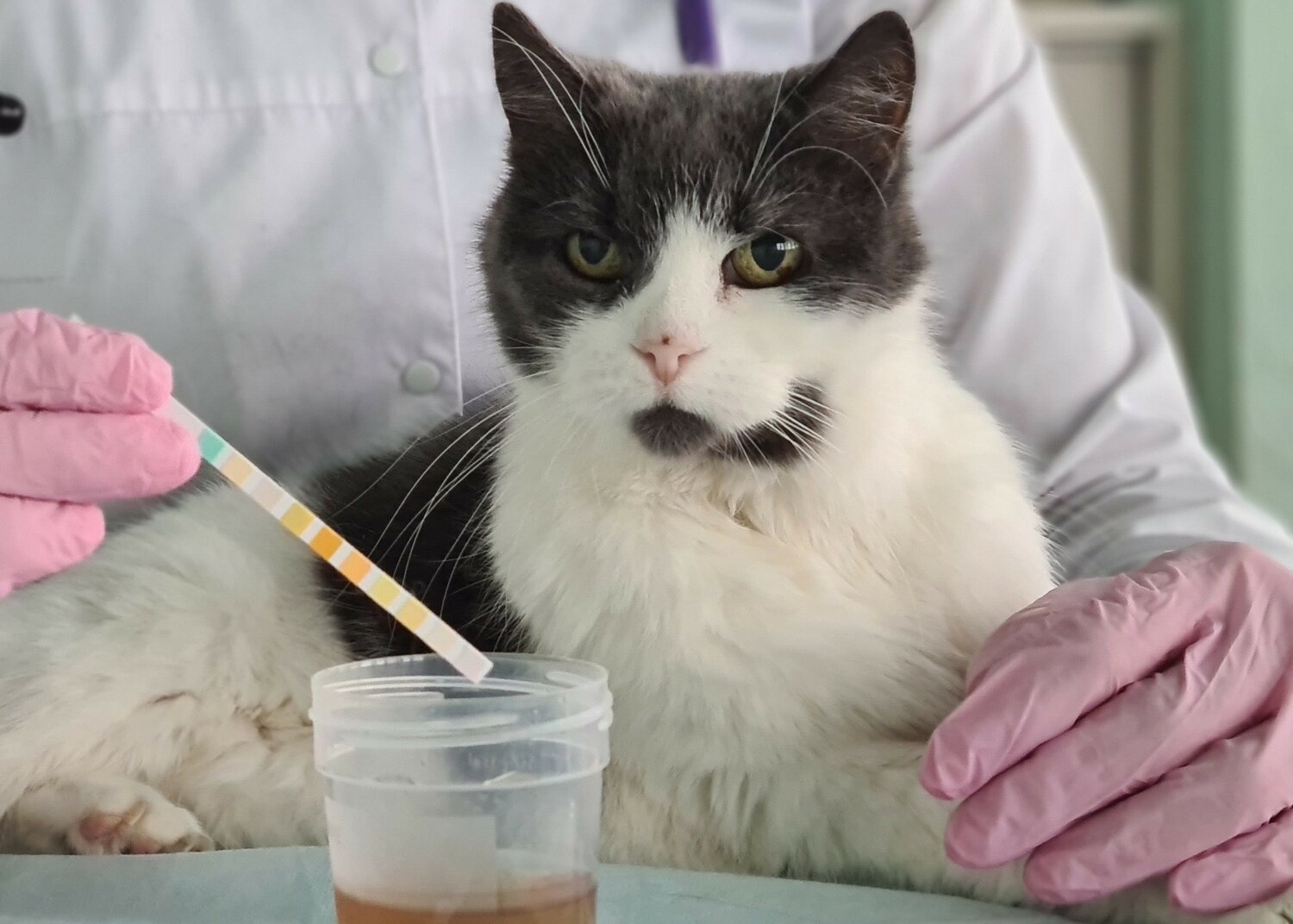
A urinalysis is an evaluation of the urine of a pet, which is a part of annual wellness testing. It can also be used to help determine the cause of any abnormal urination in a pet having changes in urinary behaviors. Urine can demonstrate early signs of internal organ disease, endocrine conditions, infections, cancers and more.
How urine is collected from pets
A urine sample can be collected by several methods.
- One possibility is a “free catch” sample. This means that as your pet is urinating, a tray or container is placed under them midstream to collect it.
- Another method of collecting urine from a pet is via cystocentesis. This is the practice of using a sterile needle and syringe to poke directly into the bladder, and this provides a sterile sample. This is most ideal for any pet with risk of a urinary tract infection, as it avoids contamination of the sample.
How the urine is evaluated
- The urine is evaluated first for color, clarity and concentration (also known as urine specific gravity). A low concentration and clear urine could be an early sign of kidney disease, whereas red urine could be suggestive of blood present in the urine.
- Next, we check the chemical analysis of the urine. This includes several tests, including pH, protein, glucose, ketones, blood, bilirubin and urobilinogen. These results will help to screen pets for diabetes, kidney disease, liver disease, toxicity, changes in blood pressure and more.
- Finally, we check urine sediment. This is the debris in urine that is spun down in a centrifuge. The most common things to be found in a urine sediment would be red or white blood cells, bacteria, crystals, or casts, although other cells such as tissue cells, sperm and more can be seen as well.
Signs of abnormal urination in pets
- Abnormal urination in pets can present with many possible signs. The most common signs of changes in urination for dogs are accidents in the house or asking to go out more frequently. They may also show increased thirst or may start to posture to urinate with little or no urine coming out.
- For cats, the most common signs of abnormal urination are urinating outside the litter box, or frequent visits to the litter box. They may also strain to urinate, leave blood in the litter box, or have increased thirst.
Many significant diseases can be detected early through a urinalysis, which is why it is an important part of wellness lab work in addition to an important diagnostic when a pet is having abnormal urination. If you have additional questions regarding urine testing in your pet, schedule an appointment with your veterinarian to discuss it further.
This branded content is brought to you by an expert in his or her respective field.





Comments
No comments on this item Please log in to comment by clicking here