


Clear, 54°
Wind: mph,
Out with the old and in with the new — high school students in Anne Arundel County are no longer encouraged to pay for materials in art and technical education classes. Before this school year, in addition to the lump sum of money the Board of Education gave to each department, students were asked to give dues in order to purchase materials.
“Too often, students in our system have been unable to fully engage in our programs,” said Eleni Dykstra, AACPS coordinator of visual arts, who believes this change will allow students to “focus their energy” on the opportunities that the art programs have to offer, without worrying about the money, “just to participate.”
Now, each art department is given a little under $10,000 for the school year, which is comparable to what Broadneck High School has had to spend on materials in years past. Catie Russo, visual arts teacher at BHS, has been teaching for seven years and “hopes [this change] will translate into other counties,” since the extra money greatly improves the quality and quantity of materials offered to all art students.
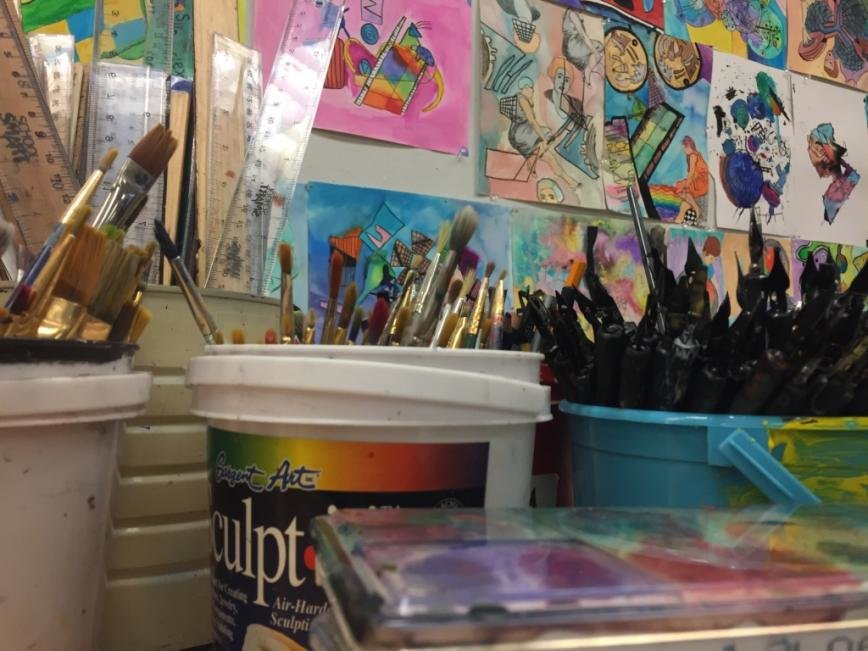
Everyone is benefitting from it, including Broadneck’s AP drawing class, among other 2-D classes, which is now offered a larger array of paper and canvas than given in the past. The budget increase has also funded more high-end colored pencils and markers.
In addition to the budget change, a laser pointer and new electric sharpeners were given to each art teacher along with a class set of laptops for the entire department. Russo believes that “strong art program materials are a big component” to whether students will thrive or not and, subsequently, enjoy the art class.
This year, technical education departments were given twice the budget as last year. The increase allowed Michael Vigna, technical education department chair at BHS, to purchase more basic materials that will reduce group sizes for projects. The new budget will also allow for students to learn and become better connected to the technical skills.
Every year, the lump sum of money is split between the departments, taking into consideration the number of teachers and their students. Before this school year, a department with a large number of students and teachers would be dependent on student dues, and without them, the value of class would lessen for students.
Relying on student dues was a challenge Vigna came across, especially when students neglected to turn in money at the beginning of the year. “[We] tried to keep the number as low as possible,” Vigna said referring to the $5 to $10 dues asked for from students. This year, among other purchases coinciding with the increase, he was able to purchase a student-friendly coding technology called Hummingbird, which can be programed using free software called Arduino.
Both teachers and students seem to be excited for the budget change. It’s looked to already be providing a material-plentiful year — art and technical education departments alike.


Comments
No comments on this item Please log in to comment by clicking here