



, 73°
Wind: mph,
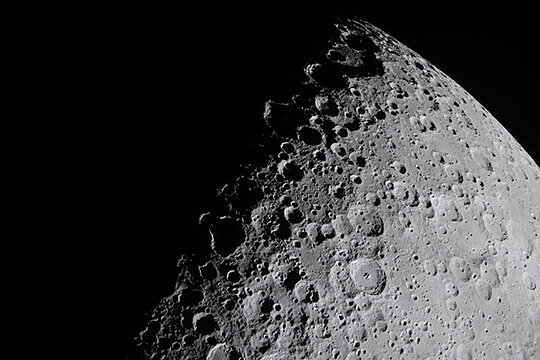
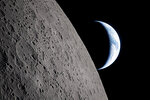
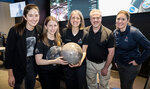

“Moon joy” — the term coined to capture the awe and enthusiasm astronauts and people worldwide felt as Artemis II became the first crewed lunar flyby in over 50 years.
From the Florida launch of NASA’s Orion spacecraft on April 1 to splashdown off the coast of San Diego on April 10, the mission marked a new stage in human space exploration, and two Severna Park residents had roles in its success.
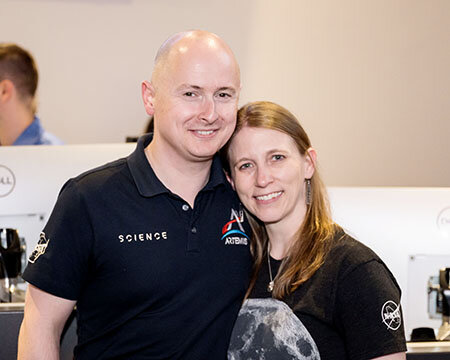
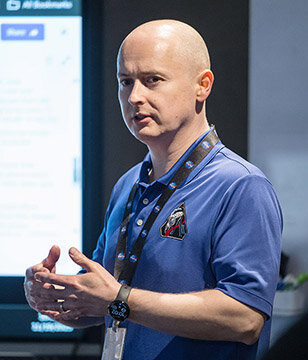
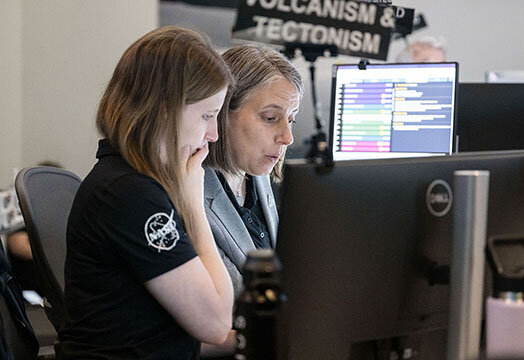
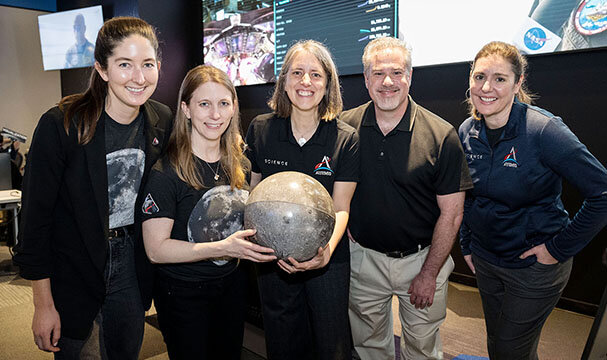
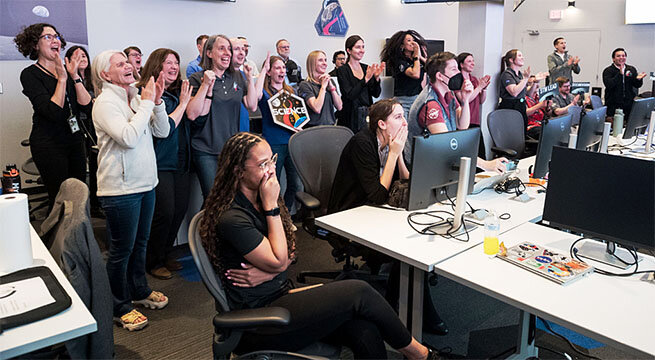
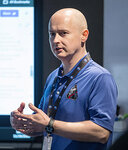
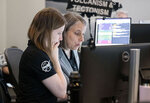
NASA scientists Andy and Debra Needham traveled to Houston for about two weeks as they worked from mission control as members of the science team.
“This is a historical first for this mission: science had a position in the flight control room, so the very famous mission control room that you see on TV, science had a position on that,” said Debra, a program scientist. “We’ve never had that before; we’ve always been a backroom support room. So we were in the support room, which is great, but we were supporting someone in the actual front room, which was very special and exciting.”
Artemis II was the second in a series of five missions that are scheduled to result in boots on the moon in 2028.
From mission control, the husband-and-wife duo of Andy and Debra watched as Commander Reid Wiseman, pilot Victor Glover, mission specialist Christina Koch from NASA, and mission specialist Jeremy Hansen from the Canadian Space Agency embarked on the Artemis II launch.
They watched as Orion’s main engine conducted a translunar injection burn, which sent Orion toward the moon. They watched as the spacecraft had its figure-eight free-return trajectory, with the moon’s gravity guiding Orion back to Earth.
The astronauts witnessed a solar eclipse and named a moon crater after Wiseman’s wife, who died from cancer in 2020. They also set a record by traveling 252,756 miles from Earth, surpassing the 248,655-mile distance set by Apollo 13 in 1970.
A research scientist, Andy had several responsibilities before and during the mission. He and his colleagues determined which of Orion’s windows would be the best for photography.
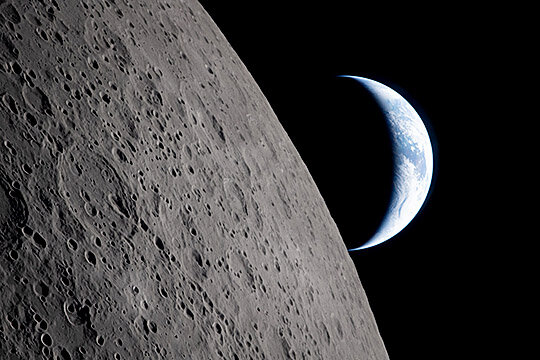
“We make sure we get the best images possible, and it really paid off once we got to the fly-by image of the moon,” Andy said. “The images were much better with the tests, because the windows are seriously thick acrylic.”
During the lunar fly-by, Andy served as an audio analyst, listening to crew descriptions in real time.
“During the fly-by, as an audio analyst, (I was) going through transcripts and AI generated stripped-in text,” Andy said, “really trying to pick out all the keywords for the geological features we were trying to see and the colors, like if they were seeing red patches or green patches, or if they saw a flash of light, impact flashes of meteors hitting, so really trying to tease out all that information before it’s forgotten.”
Debra contributed to a lunar targeting plan: the list of lunar craters, volcanic plains and other moon features that the science team requested the crew to observe, image and describe.
“We had many plans in place before we got to the mission, but what they actually saw, what was illuminated on the moon, was very dependent on when they launched because just a couple days later, the moon has shifted, the sun’s position has shifted, so the terrain that is illuminated is different,” Debra said. “And it greatly impacts what you can see. The solar eclipse wouldn’t be visible at all if they had launched April 3.”
Debra and her colleagues wrote prompts to guide the crew while still encouraging them to describe features as they saw them.
“And then we delivered that plan to them, so we put together a really nice tool, a graphic interface for them to use,” Debra said. “We uploaded that to Orion. That was a moment, like this product that we worked on is now on that spaceship.”
Debra, Andy and the rest of the science team shared enthusiasm of the astronauts as they made new discoveries and admired the views, which included “the lunar terminator,” the line between light and dark on the moon.
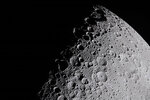
“All four of them were so entranced by the topography they could see, so the mountains and the valleys and the craters in very stark relief,” Debra said. “They kept going back to the terminator and the islands of light that they could see. So when there’s a deep crater with a wall that pops back up and the wall is catching the sun but the depths of the crater are in shadow. It’s very much like the terrain and the illumination that we are expecting the crew to experience when they go to the south pole on Artemis IV and V, that very low-angle sun.
“It makes it really easy to see every bump on the surface. So the fact that they were so awestruck by observing that, I think it lends to more excitement about what the astronauts will be able to see and discern on the surface when they get there.”
Many moons ago, or 1969 to be exact, NASA sent astronauts Neil Armstrong, Buzz Aldrin and Michael Collins to the moon during the Apollo 11 mission. Film cameras are no longer the standard, and astronauts can now get crisper images in real time. The Needhams compared the lunar fly-by to a Grand Canyon moment for the astronauts.
“You see pictures of some big feature, like the Grand Canyon,” Debra said. “You go stand on the rim. It’s like a physical sensation of the ground dropping out from under you. You just feel it internally. I think they had that experience.”
The mission had another purpose: gathering information for future research.
“The crew was looking at the south pole — that’s where Artemis IV and V are going to go,” Andy said. “That’s kind of the next step – knowing what that crew is seeing where future rovers are going to land, trying to set up the moon base, and understand what does utilization look like — how do you use the resources there? How do you extract water or other compounds from the soil and learn to live there long-term? That is the first step to getting to Mars.”
As big as Artemis II was, the Needhams had one more mission: return to Severna Park in time to celebrate their daughter’s sixth birthday. Mission accomplished.
They also spent time with their 4-year-old son, who is educated on planets and dwarf planets. Next, they will turn their attention to future Artemis missions, even if they are working in a different capacity.
Working on the science team for Artemis II was a “dream come true” for Debra. While she won’t be on the science operations team for the upcoming Artemis projects, she will support the science team from the programmatic side.
“What are the instruments that we’re going to be bringing onboard and making sure that they fit inside the vehicle or when the astronauts are walking on the surface,” Debra said, explaining her future role. “I’m doing it from a programmatic perspective but working with the engineers who are in charge of developing that hardware or working with the vendors to make sure as they develop that hardware, develop the tools, that they’re doing what we need them to do,” she said.
Andy is most inspired by knowing that Artemis I and II are just the start in this new chapter for space exploration. His moon joy is not leaving him anytime soon.
“Hopefully in the next couple of years, we will see this generation’s Apollo 11 moment,” Andy said. “I wasn’t alive whenever humans last stepped on the moon, so that for me is a huge thing: this is the beginning and there is so much more to look forward to. It’s going to get bigger, better, and we’re going to stay. Hopefully this is not the few years and then another 50 years before we go back.
“We’re going to build a moon base, we’re going to have lots of rovers, we’re going to have lots of hoppers. It’s a grand architecture coming. It’s going to be exciting to see how it develops.”
Debra
Once she graduated from school and went to Houston to work at the Lunar and Planetary Institute, Debra would drive by Johnson Space Center every day and get chills, “literal goosebumps, and that lasted for years.”“I was so excited to be working in close proximity to that environment, but I was still studying volcanoes and how they formed on Earth and applying that to other planets,” she said. “We see lots of evidence for volcanic activity on the moon but also Mars. Studying those processes to better understand Earth. But then when I joined NASA officially, that’s when I started being involved in the human exploration side of the house, so I was providing science input to think about what science labs would we put on habitats.”At Marshall Space Flight Center in Alabama, she used her knowledge to influence engineers.“Engineers think about the shell, and I’m thinking about what you put in the shell, and so those were my first opportunities to translate science for engineers. That’s a skill still under development,” she said. “I got to do some practice runs with humans pretending to be astronauts, working in those facilities to see how would they interact with a science laboratory in a habitat and things like that. And then it just kind of grew from there, so I worked on habitats, rovers, not directly with the tools, but I would look at Andy for the tools. He’s one of the people who works with the tools to make sure they’re not contaminating the samples. That just gave me a big breath of engagement across parts of the architecture that we’re building for that sustained human presence. As I have gone from element to element, it’s given me a broader perspective, so I just naturally became more programmatic.”
Andy
During college, Andy thought he might study dinosaurs, become a paleontologist, “which is a great thing for kids everywhere,” he said, citing his career trajectory as an example for youth. “As long as you’re engaged with STEM (science, technology, engineering and mathematics) somehow, you never know where your career is going to take you.”Andy developed an interest in the chemistry of rocks, mostly terrestrial rocks for the first couple of years. “I then discovered that I could look at the chemistry of planetary materials: meteorites from asteroids, from Mars, and really just to understand how the Earth formed, how the solar system formed,” he said. “So I almost stumbled into the lunar exploration side of things from a background in sample science and geochemistry. I’ve been enjoying it ever since.”His only regret is not following that path sooner.“Ten years ago, it might not have been a career trajectory you saw,” he said. “Was human return to the moon going to happen in the next decade or two? And the more real that became, the more exciting that became. So yeah, I have been really fortunate to step into this.”


Comments
No comments on this item Please log in to comment by clicking here