


, 48°
Wind: mph,
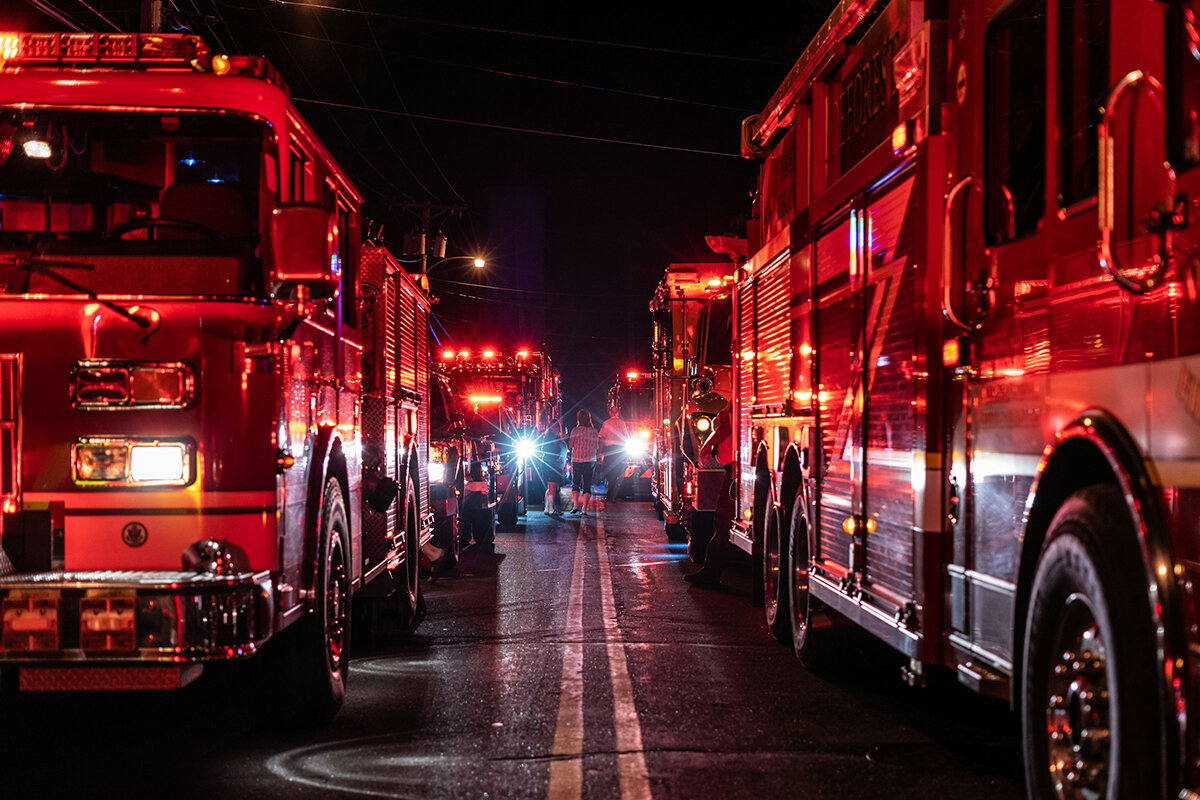
For many families, the holidays mean gathering around the dinner table, exchanging gifts and spending time with loved ones. But while much of the community celebrates at home, essential workers are answering emergency calls, caring for patients and making sure help is available when it's needed most.
For those who work in health care and emergency services, holidays don't always go according to plan. Thanksgiving dinner might be delayed by an emergency surgery, Christmas celebrations may be rearranged around a hospital shift, and time with family can be interrupted by a call for help.
For three local residents who regularly give up some of their holiday time to serve others, those sacrifices come with a sense of purpose, camaraderie and gratitude.
Answering the Call, Even on Holidays
As a volunteer ambulance technician with the Earleigh Heights Volunteer Fire Company, Joanne Stableford understands that emergencies don't take holidays off.
Although career personnel staff the station around the clock, volunteers like Stableford provide essential additional support, helping ensure that emergency services are available when community members need them.
It’s important for emergency responders to remember that most people calling emergency services on a holiday are likely not having the holiday they hoped to have.
“I don’t think anyone chooses when they’re going to have their worst day,” Stableford said. “I think that’s inherently the nature of emergency response.”
For Stableford, volunteering during the holidays is about more than responding to emergencies. It's also about supporting the people who spend those special days working to keep others safe.
Last year, rather than serving on an emergency crew on Thanksgiving or Christmas, Stableford helped make the holidays a little easier for the career personnel on duty. She purchased groceries ahead of time and helped ensure that those working could enjoy holiday meals without having to worry about shopping or preparing food between emergency calls.
Even an ordinary trip to the grocery store can be complicated for emergency responders, she explained. If a call comes in while a crew is shopping, members may have to leave their groceries at the register and return later.
On a holiday, when stores may have limited hours and families are preparing special meals, that challenge can become even greater.
Being able to provide a meal is one way volunteers can look after those who are looking after everyone else, Stableford said.
The holidays also bring opportunities for camaraderie among emergency personnel. Some neighboring stations gather for meals, while individual shifts often plan special lunches or dinners to celebrate together. Even crews that aren't scheduled to work on the holiday may organize a celebration.
For Stableford, the experience reflects the spirit of volunteerism that extends well beyond the firehouse.
"You don't have to be a firefighter in order to help contribute to your community," she said.
She encourages residents to check on neighbors, stay connected with others and consider volunteering, particularly during a season that can be difficult for some.
"It can be a tough time for people, but also a really great time to come together," she said.
Finding Joy in a Different Kind of Holiday Tradition
For Leslie Richards, a Severna Park resident and registered nurse in the emergency department at Luminis Health Anne Arundel Medical Center, working during the holidays is simply part of a profession that operates 24 hours a day, 365 days a year.
The hospital uses a rotating holiday schedule, dividing staff into two groups that alternate holiday assignments each year. That means nurses can anticipate which holidays they'll be working and plan family celebrations accordingly.
This year, Richards’ assigned holidays include Thanksgiving and New Year's. Next year, she'll have those holidays off but will be responsible for Christmas and other designated holidays.
The arrangement allows her family to plan ahead, even when the logistics get complicated.
This Thanksgiving, Richards and her husband, Nick, will host their family's celebration. There's just one complication: Richards is scheduled to work until 3 a.m. the night before.
Preparing a Thanksgiving meal after an overnight shift might sound daunting, but Richards sees it as another challenge to navigate.
"We are doers," she said of nurses. "We are people who want to get things accomplished and meet the need under any kind of circumstances."
And while working a holiday might seem like a hardship to some, Richards has found that those shifts can bring unexpected rewards.
She remembers her first Christmas working in the emergency department, when a lighter patient volume created opportunities to spend more time talking with patients and getting to know them.
On a typical busy night, those conversations can be difficult to fit in. But during some holiday shifts, the pace allows for a different kind of connection.
"Sometimes the holidays can bring about more of a chance for some kind of connection with your patients," she said.
She has also noticed a particular sense of gratitude from patients and their families during the holidays. That appreciation extends beyond the hospital room. Community members sometimes drop off handwritten thank-you notes, bagels, donuts and other treats for hospital staff. Those gestures, however small, can mean a great deal to people spending the holidays at work.
Within the emergency department, Richards said, coworkers also look out for one another.
Although holiday assignments are established in advance, staff members often trade shifts to accommodate family celebrations, travel or other commitments. Someone without plans for New Year's Eve, for example, might volunteer to cover for a colleague with a special celebration planned.
Richards sees that flexibility as part of the culture of nursing, where colleagues understand that family needs and circumstances change over time.
"It's part of the culture of knowing that this is a 24-hour job," she said.
After more than three years in nursing, Richards said she remains grateful for the teamwork that makes the emergency department function. And while she works part time, she is quick to recognize colleagues who spend even more nights, weekends and holidays caring for patients.
For Richards, the holidays are another opportunity to serve others while finding creative ways to preserve the traditions that matter most at home.
When Thanksgiving Dinner Has to Wait
For Dr. Matt Heavner, a urologist with Anne Arundel Urology, being home for the holidays doesn't necessarily mean staying home.
Unlike some medical professionals who work scheduled hospital shifts, Heavner takes calls from home. When he's on call, he is responsible for responding to emergencies at the hospitals his practice serves, including Luminis Health Anne Arundel Medical Center and University of Maryland Baltimore Washington Medical Center.
A typical day on call begins with hospital rounds to check on patients already under his care. From there, the schedule depends entirely on what emergencies arise. That can mean returning to the hospital at any hour to evaluate a patient or perform an emergency surgery.
Heavner, who lives in Severna Park with his wife and their two daughters, has learned that flexibility is essential.
Last Thanksgiving, when he was on call, his family planned a late holiday lunch in hopes that he would be able to join them. But just as the meal was coming together, Heavner received a call about a patient who needed emergency surgery.
The family's late lunch became dinner instead.
"Everyone's got to be light on their feet," Heavner said. "We try to stay flexible, and our girls are great. They know the drill at this point."
Rather than promise his daughters that he'll be home for a particular meal or celebration, Heavner tries to prepare them for the possibility that plans could change.
He and his wife explain that if someone is sick and needs help, he may have to go to the hospital.
"There's always a little disappointment, but it helps framing it that way for them and for us," he said.
His daughters have grown accustomed to the unpredictability of his work. Both were born while he was completing his medical residency, a period when he was away from home even more frequently.
These days, he has more time with his family, but the responsibility to respond when patients need urgent care remains.
"Not everything we do in urology is an emergency, but some things are," he said. "And some things just can't wait."
Heavner finds encouragement in witnessing those on duty pitch in wherever they're needed, creating a shared sense of responsibility.
"Everyone's in it together," he said. "There's a real sense of teamwork when people are pulled away from their families and on call in the hospital, especially over the holidays."
That spirit extends to his own medical practice, where partners regularly support one another. Heavner said colleagues have come into the hospital to help him with difficult cases even when they weren't scheduled to be on call.
For Heavner, that cooperation reflects the larger sense of community he has discovered since moving to Severna Park from Philadelphia about five years ago.
Although he and his wife didn't know anyone locally when they arrived, they quickly learned how connected the area can be.
Some of the patients he treats are neighbors, friends or parents of children who attend school with his daughters. Several of his colleagues have deep roots in the community, including partners whose fathers helped establish the practice.
That personal connection makes serving patients particularly meaningful.
"There's a real sense of community within our practice and in the hospitals we cover," he said. "You're showing up for the community and you're helping."
Heavner isn't scheduled to be on call this Thanksgiving or Christmas, and he's looking forward to celebrating with his family. But he knows that other physicians and hospital employees will be stepping away from their own celebrations to care for patients.
And when his turn comes again, he knows his family and colleagues will be there to support him.
A Season of Service
Although their roles are different, Stableford, Richards and Heavner share an understanding that the holidays aren't always joyful or peaceful for everyone.
For someone experiencing a medical emergency, an accident or another crisis, a holiday can quickly become one of the most difficult days of the year.
And while emergency responders and medical professionals may miss a family meal or postpone a celebration, their presence can make an enormous difference for someone else.
Behind that commitment are families who adjust their traditions, colleagues who step in for one another and community members who show their appreciation in small but meaningful ways.
The holidays may look a little different for those who serve, but the spirit of the season remains the same: caring for others, coming together and making sure no one faces a difficult moment alone.


Comments
No comments on this item Please log in to comment by clicking here