Jane Seiss
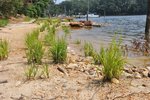
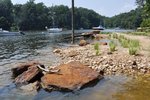
A project that was four years in the making is nearing completion along Chase Creek, the Y-shaped waterway between the Severn River and Arnold’s Pines on the Severn neighborhood. Construction of a living shoreline to combat erosion and replace a decaying wooden bulkhead was finished in mid August, and all that remains is planting additional grasses and perennials.
“This started as a 400-foot stretch of shoreline that was, for the most part, ‘bulkheaded,’ starting in the ‘50s and ‘60s,” explained community representative Ellen Posten, who is active in the project. The bulkhead was a wooden wall where the land met the water at the Pines beach area. Many local community beaches use this type of retaining wall.
“It creates a hard barrier between the water and land environments,” Posten said, adding that after World War II, Maryland offered interest-free loans to property owners for construction of bulkheads — then considered the best form of shoreline management.
“A bulkhead destroys habitat and vegetation because the wave action causes more erosion due to the waves’ scouring action,” Posten noted. “[Bulkheads] are necessary where it is steep or where there is heavy wave action, but they’re not needed here.”
Severn on the Pines residents were already concerned about erosion and the vulnerability of the decaying bulkhead, but they made the project a priority when two large trees along the creek came down during a storm, taking huge root balls with them. The neighborhood organized to come up with a long-term plan, and the living shoreline became the solution.
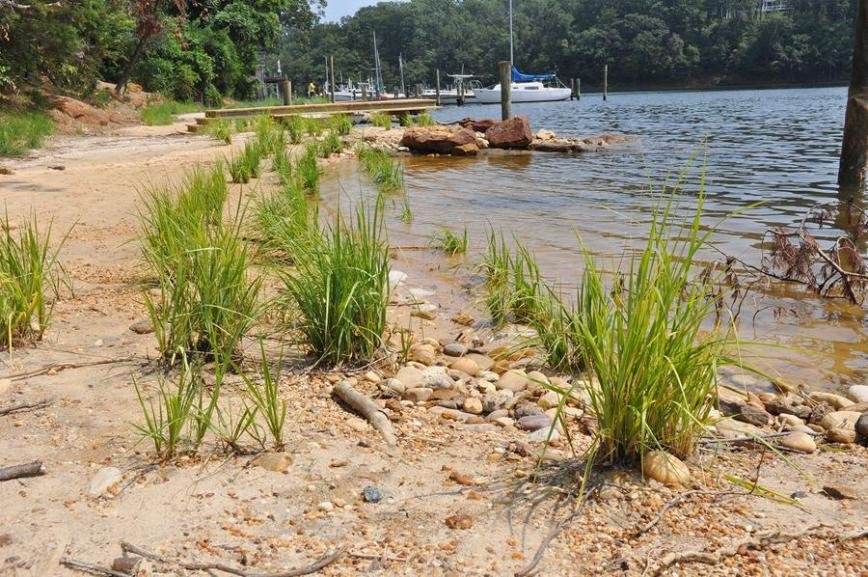
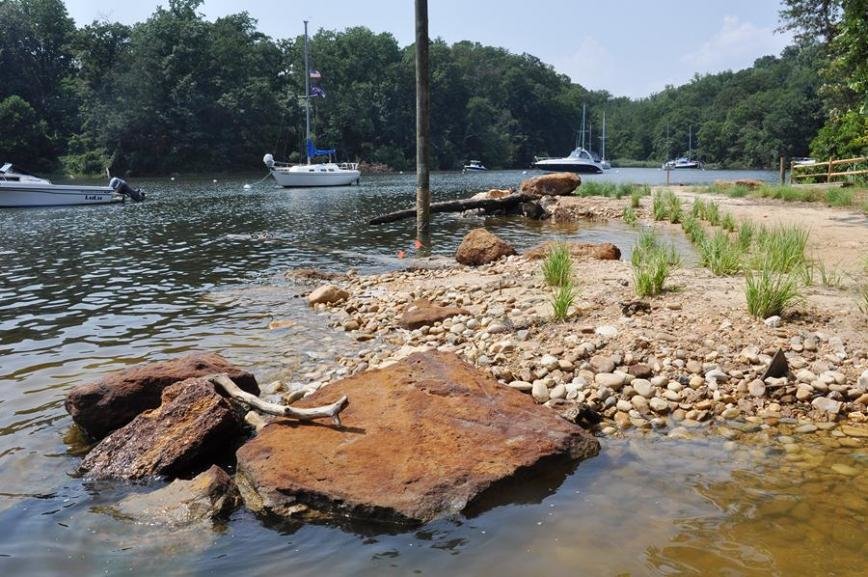
“A living shoreline tries to re-create a natural shoreline with native forces at work, like weather and water,” Posten shared. “It’s an organic form that’s naturally changing. It is a configuration that imitates the natural habitat and becomes more stable.”
To gain community support, advocates of the shoreline project developed an education program for the community. They held large meetings and small group sessions to provide details on plans and answer questions. A video outlined problems with the current shoreline, detailed repair options and explained how a living shoreline would be the best solution.
There are 237 homes in the Pines on the Severn community. The charming enclave was originally platted in 1922 and once served as a summer cottage community for Baltimore families. The neighborhood boasts a half-mile of waterfront property. “We have wonderful community support,” Posten said. “I’ve never seen such enthusiasm in a neighborhood effort.”
After community members spent several years fundraising, planning, educating and designing, construction of the shoreline began on June 1. In the first three days of the project, 150 dump truck loads of material were brought to the restoration site.
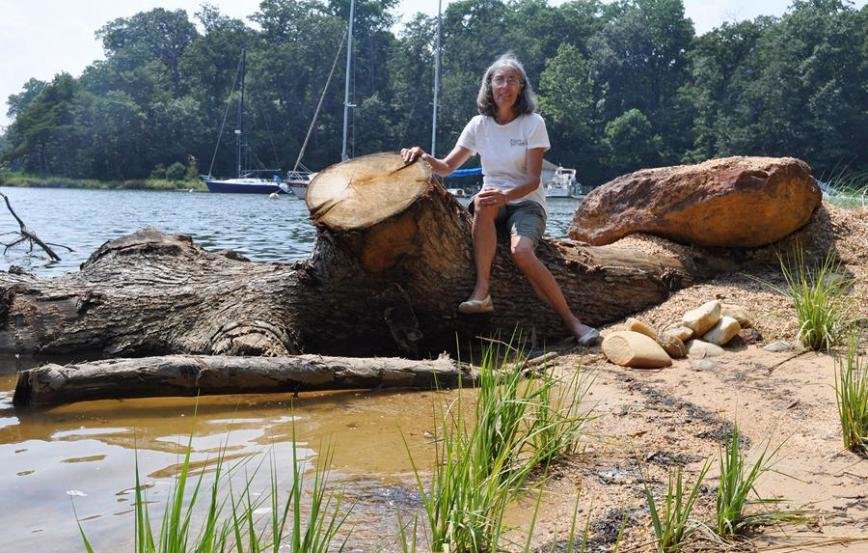
Tons of new material was required to re-grade the area and provide a new and natural slope into the water where the bulkhead had once provided a hard barrier. Sand, wood chips, gravel, small stones and larger stones, including boulders, were all used to create the shoreline. Bay grasses have been planted and natural shoreline curves were sculpted with sand and pebbles to gently meet the water and slow wave action. Invasive plants will be removed, and native greenery like beach plums and sweet bay magnolia were planted along the creek’s tree line.
The Maryland Department of Natural Resources, the Chesapeake Bay Trust, Rotary of Annapolis and community-raised funds helped pay for the beach project. The Severn Riverkeeper, a nonprofit that works to protect and restore the Severn, consulted on plans. The reworked area was designed and constructed by Underwood and Associates, an Annapolis company that specializes in environmental restoration. Keith Underwood, owner of the company, grew up in the Pines neighborhood and was chief designer of the new shoreline.
“The beach will only get stronger and stronger. The way it is designed works with natural energy,” Posten said. Now that the shoreline has been upgraded, creatures such as ducks, otters, crabs and other bird life will benefit.
Pines on the Severn hopes to continue shoreline improvement by addressing the swimming and docking areas that were not included in this effort. Visit www.severnriverkeeper.org and click on the video icon at the top of the page to find the Pines on the Severn shoreline restoration video.





Comments
No comments on this item Please log in to comment by clicking here