



, 75°
Wind: mph,
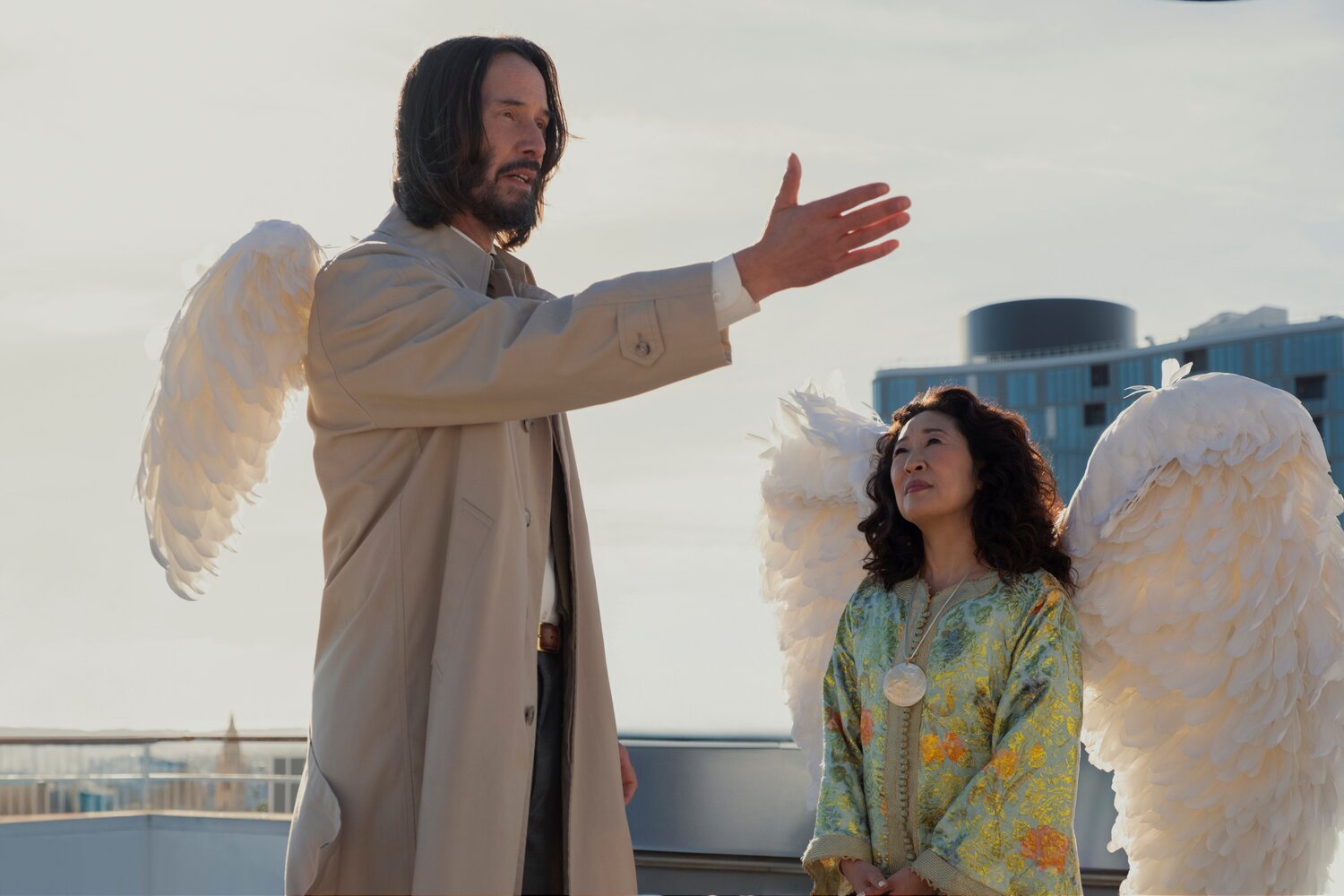




“Good Fortune” is a modern day “The Prince and the Pauper” tale, with Aziz Ansari playing Arj, the “pauper” (a gig economy worker with a useless college degree struggling to make ends meet), and Seth Rogen playing the “prince,” Jeff (a venture capitalist with an ownership stake in multiple gig economy businesses).
Keanu Reeves plays Gabriel, a low-level guardian angel who, much like Arj, is lacking fulfillment in his life as a “texting and driving” angel — he longs to guide lost souls like more important angels he admires. Gabriel oversteps his bounds as an angel to swap Arj and Jeff’s lives, in an attempt to show Arj that his own life has meaning; this has unintended consequences for all three characters, and hijinks ensue.
For a moment, I thought the film was going to go for the classic message this type of story tends to convey: That on one hand, the wealthy could do with seeing how the rest of us live, but on the other hand, being wealthy isn’t all it’s cracked up to be. I was prepared to be very annoyed, because defending multimillionaire or billionaire venture capitalists as “having problems too” would be very out of touch in 2025. This appears to be Gabriel’s intent when switching Arj with Jeff — to show Arj that Jeff has his own demons.
But thankfully, this is not the approach the film takes. It doesn’t attempt to sugarcoat or hide the worst aspects of the zero-hour contract gig economy, in a world where robots are slowly replacing us. Jeff’s life is just better than Arj’s, and if anything, the most entertaining parts of the film come from having to watch Jeff suffer through short-tempered reviewers, cheap tippers, and the other familiar pitfalls of late-stage capitalism designed to keep people in poverty indefinitely — pitfalls people like Jeff designed and continue to enforce.
Instead, the film takes a more modern and healthy approach to answering the question of what makes a good life in the society in which we find ourselves. Arj learns that it may seem hopeless having to fight against impossibly large multimillion dollar corporations, but that doesn’t mean there is nothing you can do or that fighting isn’t worthwhile. And Gabriel, human for the first time in his existence, finds himself extremely discouraged by the human condition — but also finds joy in the small things we take for granted as human beings.
It’s hard to remember at times that even the poorest humans today in the United States have a higher standard of living than the majority of other humans on Earth, better even than many of the kings of old (castles were cold and smelly, spices cost a fortune, and diseases were everywhere).
It’s possible to balance anger at the unjustness of our society with gratitude for the small joys of the human experience — a chat with a friend, a dance with a partner, a tasty meal. We can be grateful that we live in a world with penicillin while being enraged at the lack of affordable health care. Two things can be true at once.
“Good Fortune” is a feel-good romp that’s played rather straight — sometimes the message is literally spelled out rather than shown — but that’s just fine. It’s not particularly memorable but perfectly charming. Reeves is a delight as a fish-out-of-water human who has to suddenly navigate dish washing, nicotine and tacos, and Rogen rarely fails to amuse me. What’s offered is less of a riotous laugh and more a series of relatable chuckles, but the film is well worth watching.


Comments
No comments on this item Please log in to comment by clicking here