



Clear, 42°
Wind: mph,
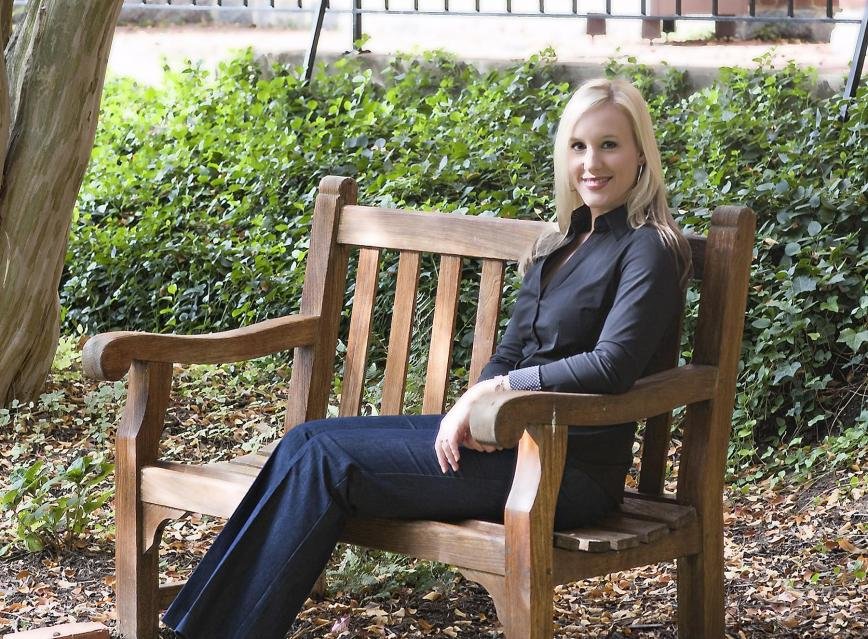
One lesson “Back to the Future” and H.G. Wells’ “The Time Machine” taught audiences is that time travel is a complicated pursuit. Author Erika Robuck doesn’t have a magical device that allows her to navigate through eras past, but she has developed a knack for bringing historical figures and their afflictions to life, from Zelda Fitzgerald’s schizophrenia to Ernest Hemingway’s manic depression.
“I’m obsessed with the past and its relationship to the present, and that’s something I’ve always been drawn to in my reading,” acknowledged Robuck, whose fourth novel, “Fallen Beauty,” is scheduled for release in March 2014. “I think about Tracy Chevalier, and ‘Girl with a Pearl Earring,’ where she saw this painting that [Johannes] Vermeer had done. She knew nothing about the girl, but knew that she had to be important to be the subject of a painting and to be so evocative. That’s something that has always fascinated me.”
A wife and mother of three boys, Robuck grew up in Severna Park and applied lessons learned as a youth to her future occupation: teaching third graders at Millersville Elementary School. But after completing her first novel, she realized writing – not teaching – was her calling.
“I’m an avid reader, so I was inspired by the stories and poems I read,” said Robuck, who self-published her first novel “Receive Me Falling” in 2009. “When I was in college, I studied literature as a minor because I didn’t think I could do anything with it. One day, I ended up with a full novel and realized this is what I’d always wanted to do.”
To accurately grasp historical settings and each literary icon’s distinct traits and dialect, Robuck spent three to four months doing research for each work. She traveled to locations where the subjects resided and studied their writing. Her debut offering – in which protagonist Meghan Owen inherits a plantation on the Caribbean island of Nevis and uncovers truths about her ancestors and their slaves – sold enough copies for her to pitch a second book. Her sophomore effort, “Hemingway’s Girl,” was picked up by Penguin Group and published in 2012.
“One of the criticisms I got after my first book is that it didn’t fit neatly in a genre,” Robuck declared. “Critics kept saying it had historical fiction, present-day [aspects], romantic elements and paranormal elements, but it’s wasn’t really any one of those things. ‘Hemingway’s Girl’ is just historical fiction and it takes place in a definable era.”
“Hemingway’s Girl” continued a trend where Robuck observed historical figures through the viewpoint of fictional characters. Her literary counterpart for Hemingway was Cuban American housekeeper Mariella Bennett. For “Call Me Zelda,” Robuck created nurse Anna Howard, whose desolate past paralleled the turmoil of Zelda Fitzgerald.
“I tried to set up my protagonist as a foil for someone who can be redeemed by the things that the true person may succumb to,” Robuck explained. “For Anna to really care about Zelda, she needed similar experiences to be drawn to her. She suffers from post-traumatic stress from her war years, and the loss of her husband and daughter, where she sees Zelda, who is losing her husband and daughter actively through mental illness. That’s what the instant connection is about, getting her deeper involved, willing to sacrifice things about her personal life to help these people.”
Robuck called her upcoming release, “Fallen Beauty,” her hardest to write. Focusing on poet and playwright Edna St. Vincent Millay, the work is also considered by Robuck to be her best yet. Even though she always considers her current project to be the most important, she encourages new authors to be persistent and waste no time between manuscripts.
“I thought when I wrote my first novel that it was the ultimate book I could write and I had special feelings about it,” Robuck mentioned. “Every rejection letter was very sad and hard to deal with. But If I had just moved along and not placed emotional importance on that, it would have been easier to endure all of that. Your brain should be on the book you finished and your heart should be on the one you’re writing.”
The accomplished author visited the Broadneck Library on September 26 to chat about her inspiration for “Call Me Zelda.” She also will discuss the novel with a book club at the Crofton Library on October 15 at 10:00am. For more information, visit her website, www.erikarobuck.com.


Comments
No comments on this item Please log in to comment by clicking here