



Clear, 51°
Wind: mph,
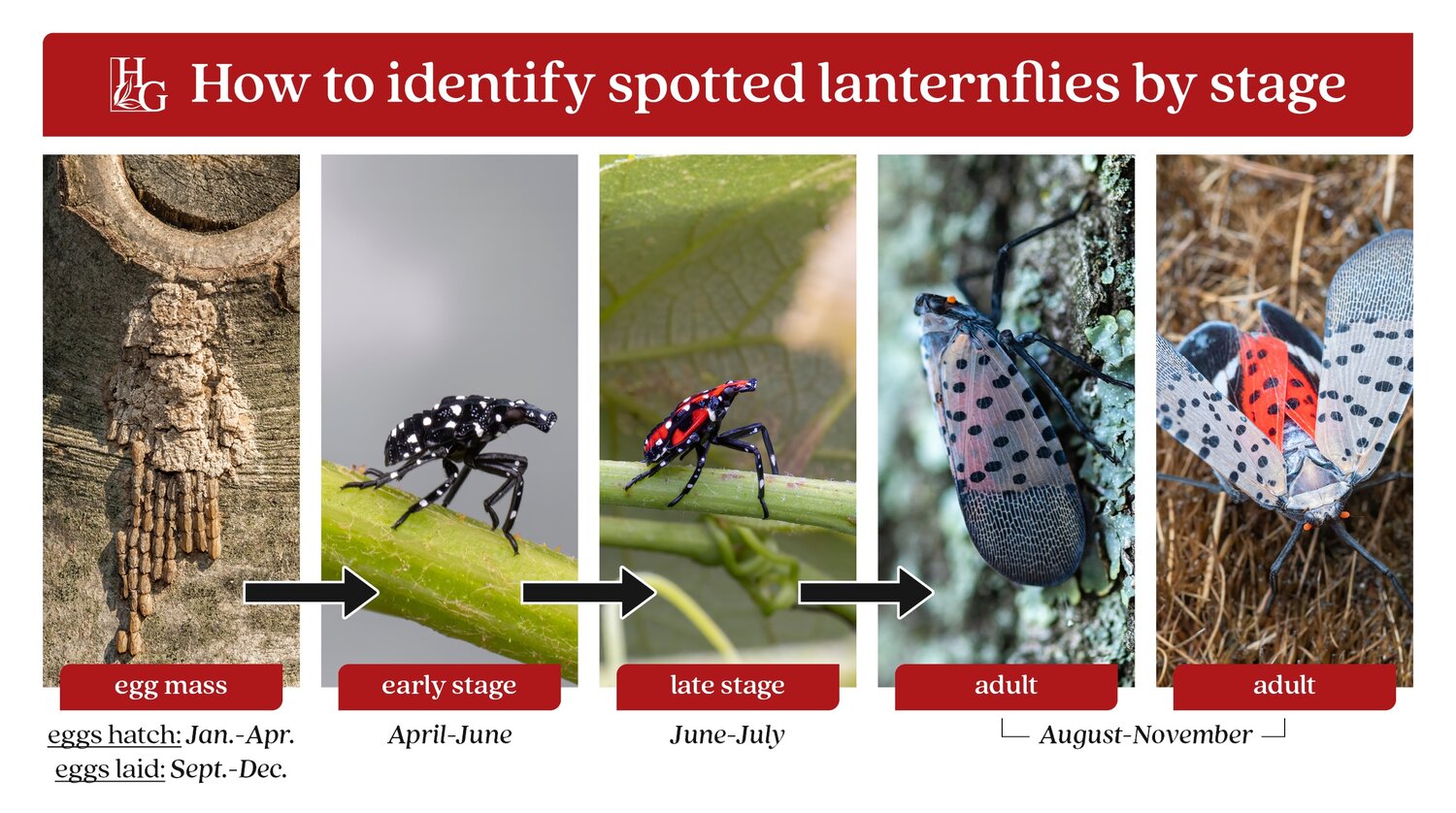
Hey neighbors, spotted lanternflies (SLFs) seem determined to be the uninvited guests of the season, showing up on trees, decks and just about everywhere else. Here’s where we are right now with SLFs, what you can expect as we move through fall, and what you can do about them.
You are probably starting to notice more of the adult SLFs. The adults tend to be more highly visible than the juveniles and can often be seen hopping and flying around as they feed. As we move into October, they will shift their energy into laying eggs.
Spotted lanternflies lay their eggs in clusters of 30-50 eggs arranged in four to seven rows. The egg clusters usually have a mud-like substance coating them, so depending on where these eggs are laid, they can be well camouflaged. They can be found on a variety of vertical surfaces such as trees, rocks, buildings, outdoor furniture and even cars. Fresh SLF egg clusters can be found from September through December in our area.
This frenzy of egg laying is the lanternflies’ way of throwing one last big party before the cold sets in. The lower temperatures that November and December typically bring are too much for the adult SLFs, which will die off once we start to get frosts. But the egg clusters that they so diligently hid can hatch into next year’s infestation in the spring.
I know that this all sounds overwhelming, but don’t give up. Here are some things that you can do now to reduce their numbers:
Remember that even though it can be easy to get overwhelmed by the idea of invading SLFs, there is plenty that you can do to reduce their numbers. And by helping to slow down the spread of SLFs, we are giving native predators a chance to realize that SLFs can be delicious!
The knowledgeable staff at Homestead Gardens is here to help with all of your garden questions. Stop by anytime to chat with an associate. You can also receive timely updates and seasonal tips by following Homestead Gardens on Instagram or Facebook.
Visit Homestead Gardens at 522 Ritchie Highway in Severna Park or go to www.homesteadgardens.com.


Comments
No comments on this item Please log in to comment by clicking here